
Millennial's theory on why "we cannot complain" about loneliness goes viral
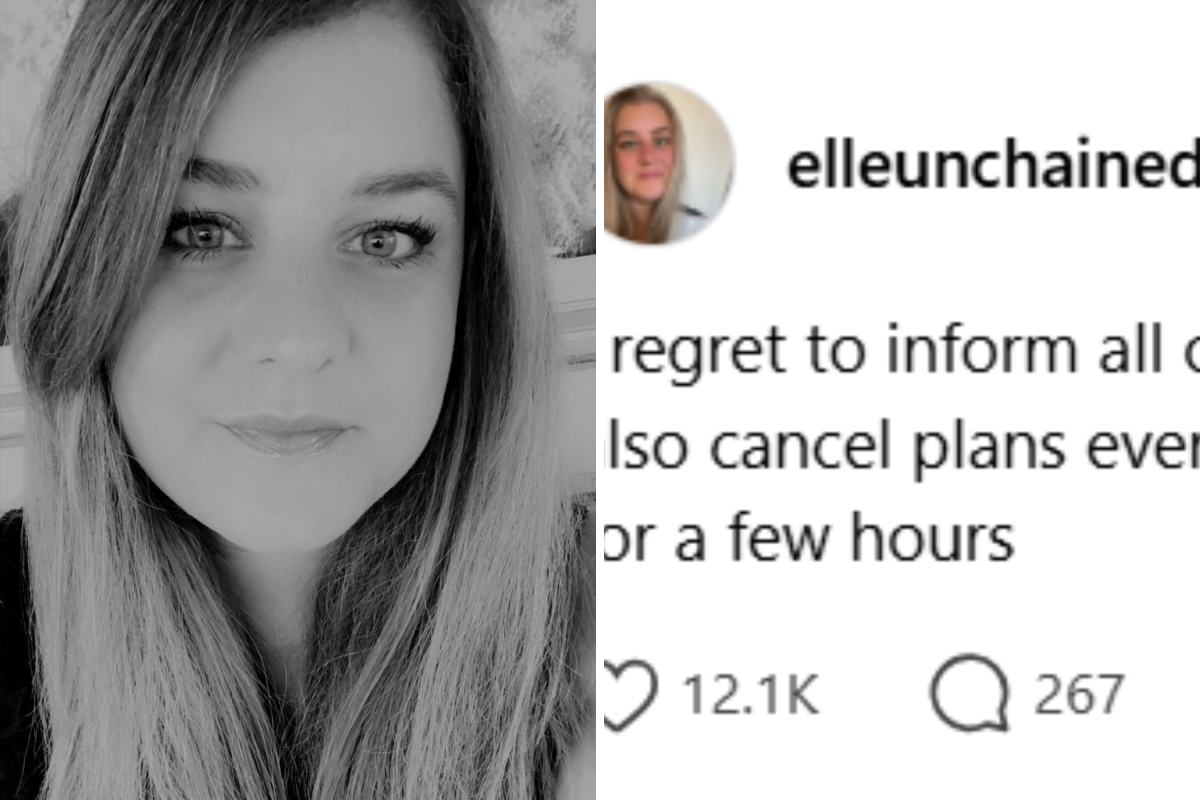
A Pittsburgh woman has sparked conversation online about the link between loneliness and the supposedly millennial habit of canceling plans, after her post about the emotional consequences of flaking on friendships went viral on Threads.
Leah Cass (@elleunchained), 38, shared her candid reflection on social isolation and community-building on July 27. The post read: "I regret to inform all of us that we cannot complain about not having community and also cancel plans every single time we feel like staying in bed instead of being awkward for a few hours." It has received over 12,000 likes.
Speaking to Newsweek, Cass said she never expected the post to resonate so widely.
"I noticed that while many people agreed, a few took it more personally, and I get it," she said. "I have spent quite a few nights canceling plans needing the alone time.
"Personally, I have a tendency to withdraw when I'm struggling. I'm introverted, neurodivergent, and was homeschooled, so socializing has never been second nature."
Her post, which called into question the comfort-first mindset many have adopted in social settings, struck a cultural nerve in perhaps the first generation marked by the prioritization of mental wellness, hyper-individualism, and burnout.
Cass said the message was a reminder—first and foremost—to herself.
"I've come to realize that I haven't always made the effort to build the kind of community I long for," she said. "This post was really a reminder to myself and others that we can't say we want connection if we're not willing to take the sometimes uncomfortable steps to create it.
"That doesn't mean it's easy. It's often much more tempting to stay in bed, unfortunately, but real connection requires us to get out there and try, even if we feel awkward."
Cass, who began anonymously posting poetry to Instagram in 2015, said that digital vulnerability helped her forge meaningful connections online. Her following grew unexpectedly, eventually leading to the publication of five poetry books, one of which became an Amazon bestseller.
Still, while writing may be her forte, Cass says the challenge of in-person interaction persists.
"One of the biggest challenges we face is learning how to show up for each other in real, meaningful ways," she said. "Isolation has become so common, particularly since the pandemic.
"While it may be awkward and challenging, our only way forward is together, and I've spent quite a bit of time reflecting on what that actually looks like."
Cass' message echoes frustrations with the rise of "plan-cancel culture," where mental exhaustion or a desire to be alone justify bailing at the last minute, a behavior that some say undermines friendships.
Several viewers shared their opinions in the comments.
"People have made this their entire personality," one viewer said. "'I want to be invited but I'm not going to come'. It's the most selfish thing. Show up for your friends!"
"To have a village, you must be a villager," another added.
Social trends commentator Jo Hayes told Newsweek that millennial feelings of loneliness stem partly from a lack of deep in-person connection.
"There are many reasons why millennials report this feeling of loneliness compared to previous generations at the same age," Hayes said. "A lack of the same social networks that previous generations tapped into is one reason—like church, community or volunteer groups, sports clubs."
She noted that social media has replaced much of that community time, but often fails to offer true emotional sustenance.
"Social media interaction, that, in many cases, is faux social, doesn't provide the same emotional or relational connection and benefits that in-person activities do, hence, loneliness," she said.
Hayes added that packed schedules and over-commitment are also key contributors.
"Millennials are also supremely busy—with super-packed, super-hectic schedules providing minimal time for quality social interaction," she said. "They may desire to go out for dinner with friends on a Friday night, but the packed week means all they have energy for is to curl up on the couch and watch a movie."
That digital-first lifestyle may also be tied to what some have called the therapization of life—where therapeutic language is frequently used in everyday contexts as a result of an increase in younger generations seeking therapy.
The Loneliest Generation
One viral example that sparked memes and debate came from a 2019 friend breakup text message, in which a woman told her friend she was at "emotional and mental capacity" and could not hold space for her friend's emotions. Critics argued that mental health terminology is increasingly used as a way to avoid hard interpersonal conversations.
Cass' post comes amid ongoing debate about how modern life has restructured friendship. From the slow disappearance of "third spaces" like libraries and community centers, to the economic strains that make socializing expensive or logistically difficult, millennials have reported higher levels of loneliness than generations before them.
A 2019 YouGov poll discovered that 30 percent of millennials said they "always or often" feel lonely, compared to 20 percent of Generation X. While a 2025 study by Kaspersky looking into how millennials interact with digital platforms found that "approximately" 36 percent of millennials report that engaging with online communities has positively affected their mental health.
The 2018 BBC Loneliness Experiment heard how 55,000 people aged 16 to 99 think and feel about loneliness. The results showed that 40 percent of the participants aged 16 to 24 said they felt lonely often or very often, compared to 29 percent of people aged 65 to 74.
Hayes offered some advice to people tackling these feelings.
"Be intentional about pursuing quality, in-person relationships," she said. "Arrange a coffee catchup with an old friend, join a church, volunteer at a soup kitchen. It's about balance, common sense, and going back to basics."