
Map shows only 14 states where homeowners have not lost equity
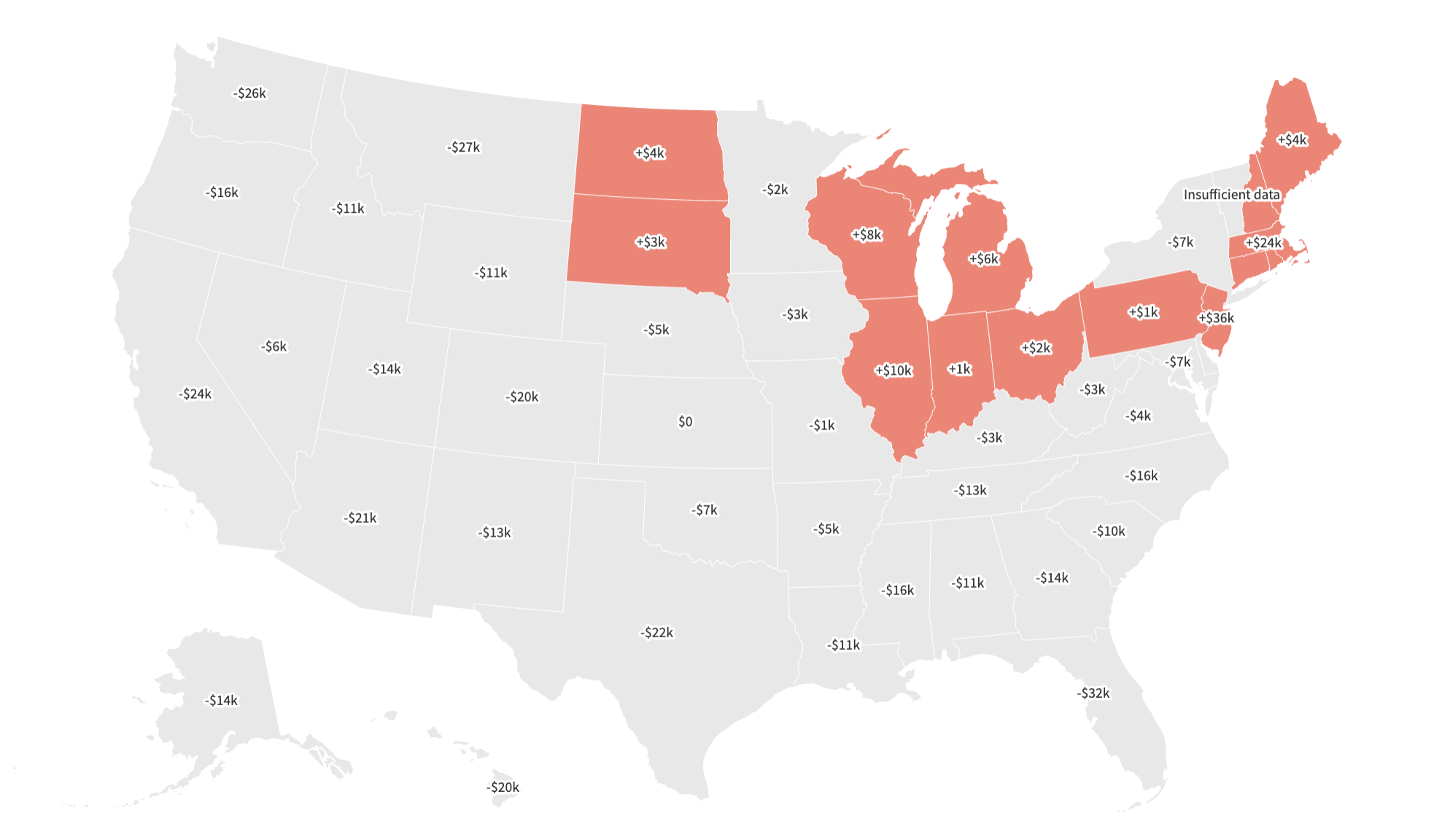
U.S. homeowners have lost $9,200 in home equity over the past year, according to a new report, as the overheated housing market slowed to a crawl during the spring and the summer.
But the latest Homeowner Equity Report (HER) from real estate analytics firm Cotality found that, even with those losses, the average U.S. borrower still has about $307,000 in accumulated home equity after years of skyrocketing home prices during the pandemic.
How Much Equity Have Homeowners Accumulated?
As demand for housing surged during the pandemic amid a widespread lack of inventory across the country, home prices shot through the roof—adding millions of dollars in real estate wealth to those who have managed to snatch a property or already owned one.
These equity gains, however, have slowed down since 2023, when historically elevated mortgage rates and sky-high prices started to put a damper on demand. Homeowners gained $25,000 in equity in 2023, and another $4,500 in 2024. This year, they reported a loss.
Borrower equity also declined year-over-year in the second quarter of 2025, falling by $141.5 billion or 0.8 percent, according to Cotality. Despite this setback, U.S. borrowers remain richer than they ever were before the pandemic. Homeowners with a mortgage have a net equity of $17.5 trillion now.
"The average borrower equity is approximately $307,000, representing the third-highest figure in recorded history and an increase of $124,000 compared to the first quarter of 2020 at the start of the pandemic," said Dr. Selma Hepp, Cotality chief economist, in the report.
"Even in markets where recent price declines have pulled down average equity, such as the District of Columbia and Florida, borrowers on average hold almost $350,000 and $290,000 in equity, respectively."
These losses have increased the number of mortgaged homes with negative equity from 1.7 percent to 2 percent year-over-year, though these figures remain historically low.
Equity for each property was calculated by comparing the estimated current value of that home against the mortgage debt outstanding. If the MDO was greater than the estimated value, then the property was determined to be in a negative-equity position.
Where Have Homeowners Lost the Most Equity—And Where Did They Gain It?
A majority of states in the union—for a total of 32—posted declines in home equity over the past year, while only 14 reported gains. Vermont was excluded from Cotality's analysis due to a lack of data.
The biggest losses were reported in the District of Columbia ($34,400), Florida ($32,100), and Montana ($26,900).
While the District of Columbia likely suffered from the turmoil caused by the mass layoffs of federal workers, which are concentrated in the nation's capital, earlier this year, the Sunshine State has struggled with growing inventory and rising demand in recent months, which has forced its housing market to a quick cooldown.
Most of the 14 states that have reported rare gains are in the Northeast, an area where, on the other hand, the housing shortage remains acute. The three states with the largest gains were Connecticut ($37,400), New Jersey ($36,200), and Rhode Island ($31,200).
These areas are not experiencing the same correction that pandemic boomtowns across the South are now facing after years of overheating, and demand for the limited supply available remains strong, keeping prices up.
What Happens Next?
Experts say the U.S. housing market is likely to become slightly more affordable for buyers soon, especially if mortgage rates continue trending down. For homeowners, this might mean that the massive equity gains reported during the pandemic are going to be strictly a thing of the past.
"Home prices this year have experienced the slowest rate of growth since the Great Financial Crisis of 2008," Hepp said. "As appreciation remains modest and even declines in some markets, home equity accumulation is projected to follow suit," she added.
"With the reduced pace of appreciation, seasonal fluctuations in home prices will have a pronounced impact on equity changes. Recent declines also highlight the benefits of accessible equity as some homeowners are leveraging their equity for alternative financial purposes," Hepp said.