
Indo-Pacific map shows where US bombers operate outside of America
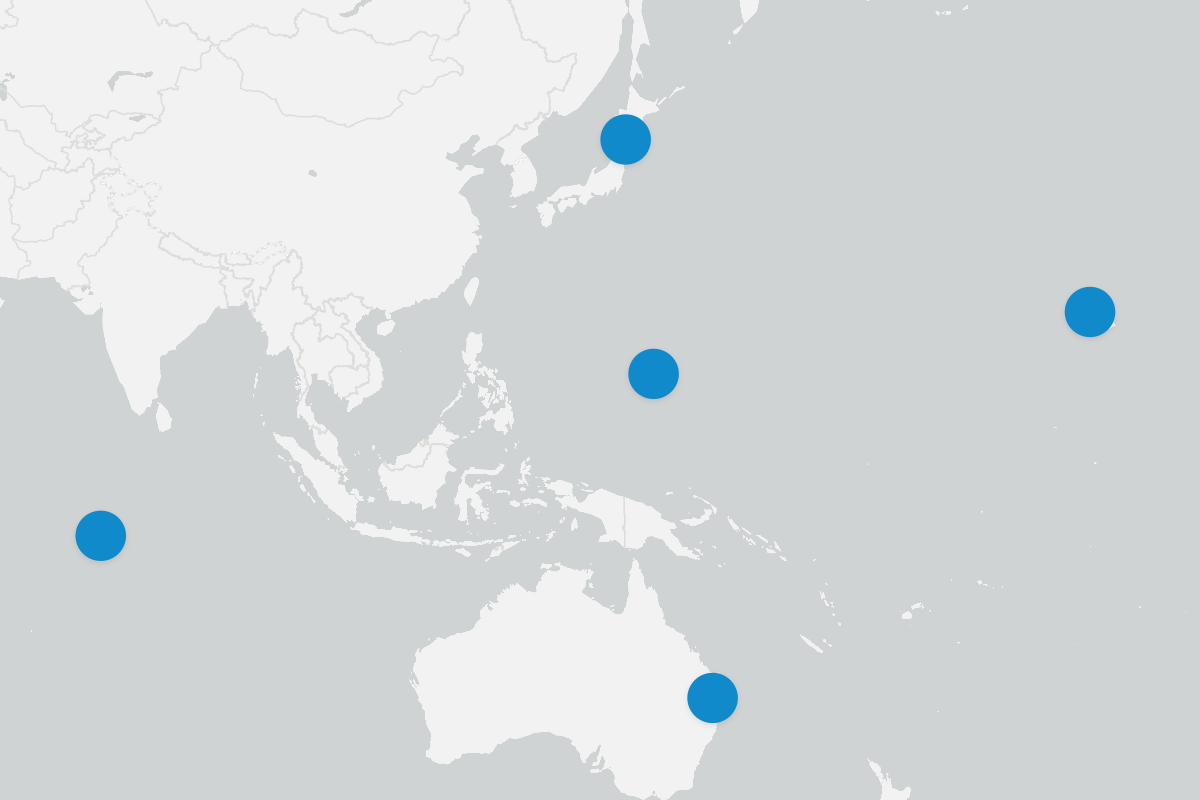
The United States has been rotating its bomber fleet, including those that are equipped for nuclear armament, in the Indo-Pacific region to deter aggression, a Newsweek map shows.
The U.S. Air Force Global Strike Command, which is responsible for the entire American bomber force, is ready to conduct Bomber Task Force (BTF) operations "anyplace, anytime, and for any duration required," the Louisiana-based command told Newsweek on Monday.
Why It Matters
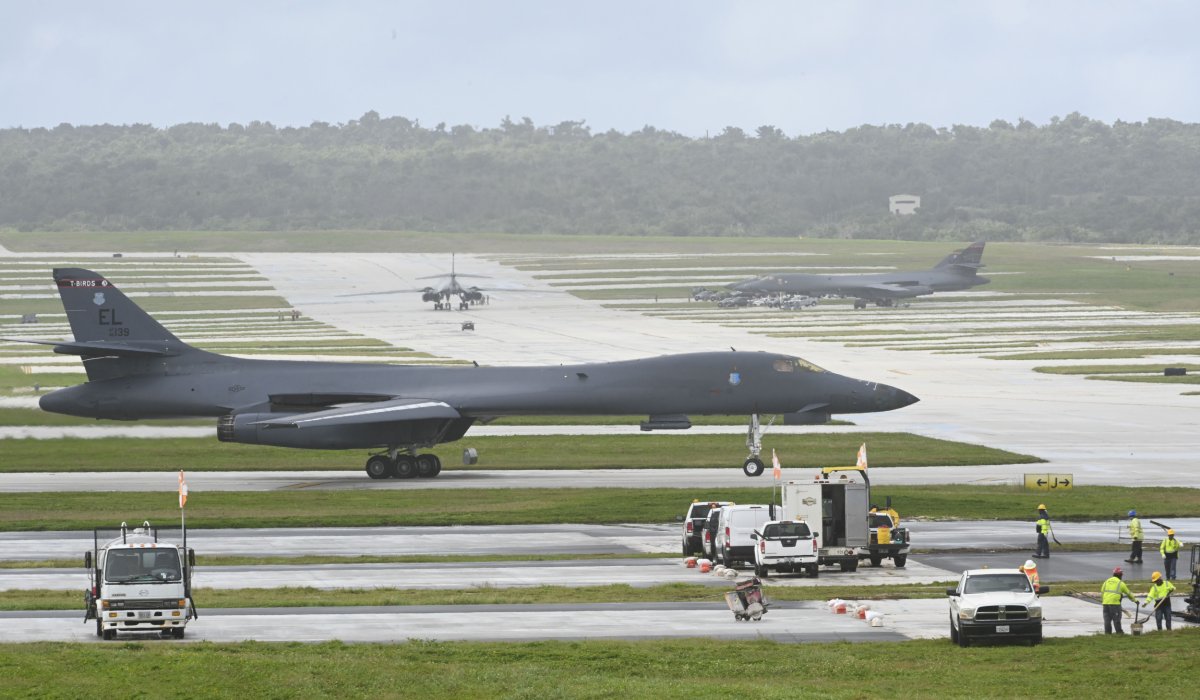
The U.S. Air Force operates three types of bombers in active service: the nuclear-capable B-2 Spirit and B-52H Stratofortress and the B-1B Lancer, which can carry up to 75,000 pounds of nonnuclear weapons.
American bombers have been conducting BTF missions since 2018 in the European and Pacific theaters by deploying at U.S. and allied air bases for an unspecified period, demonstrating the Pentagon's ability to "command and control bomber forces anywhere."
These missions, which are regular and routine, show the U.S. is committed to strengthening deterrence and promoting peace and stability by providing "combat-ready forces for nuclear and conventional global strike," according to the U.S. Air Force Global Strike Command.
What To Know
Since the commencement of BTF missions, the U.S. has sent its bombers to five locations in the Indo-Pacific region that are outside the continental U.S., including two locations on U.S. territory: Andersen Air Force Base in Guam and Joint Base Pearl Harbor-Hickam in Hawaii.
Guam and Hawaii are part of the second and third island chains, respectively, under a U.S. containment strategy to restrict Russian and Chinese military access to the Pacific Ocean. Both islands also serve as strategic outposts for projecting the U.S.'s military power.
The remaining locations are Royal Australian Air Force Base Amberley in Australia, Misawa Air Base in Japan and Naval Support Facility Diego Garcia in the British Indian Ocean Territory. Australia and Japan are located within the first and second island chains.
Each BTF mission involves two to four aircraft and lasts for a month on average. The U.S. is currently conducting two deployments: the B-1B bombers at Misawa Air Base and the B-2 bombers at Naval Support Facility Diego Garcia.
While the U.S. Pacific Air Forces told Newsweek that it would refrain from discussing the number of deployed bombers and the length of their presence in Japan, it has been confirmed that this will be a "limited deployment" for training with U.S. allies and partners in the region.
Prior to the first-ever rotational BTF deployment in Japan, the B-1B bombers took part in training with the South Korean air force in the ally's airspace. North Korea later condemned Washington for "escalating tension" and "inciting confrontation" in the Korean Peninsula.
Earlier this month, the Pentagon said additional "air assets" had been ordered to deploy to the Middle East amid rising tensions. However, it has yet to confirm the deployment of as many as six B-2 bombers at the Indian Ocean outpost, which were spotted by satellite imagery.
What People Are Saying
The U.S. Air Force Global Strike Command told Newsweek: "Our command is committed to working with U.S. allies and partners to deter aggression in the Indo-Pacific; those allies and partners provide an asymmetric advantage that our adversaries can never hope to match."
The U.S. Pacific Air Forces told Newsweek: "The U.S. Air Force routinely deploys a variety of aircraft and units throughout the Indo-Pacific area of operations in support of geographic combatant command objectives and training. … Bomber Task Force deployments support the larger Indo-Pacific strategy to uphold a free and open Indo-Pacific and are not in direct response to any political or economic factors."
What Happens Next
The U.S. looks for every opportunity to train alongside allies and partners in the Indo-Pacific region to bolster collective ability, the U.S. Pacific Air Forces told Newsweek. It remains to be seen whether the U.S. will expand BTF missions by sending bombers to new locations.