
Indian embassy: terrorists behind attack will be brought to justice

India has vowed to bring to justice those responsible for the Kashmir terror attack that killed 26 civilians, issuing a scathing response to Pakistani claims that blaming them was "far-fetched" while calling the killings a possible "false flag" operation. while saying he had no evidence of that.
Responding to earlier remarks by Pakistani Ambassador in the U.S. Rizwan Saeed Sheikh, the Indian Embassy in Washington told Newsweek in an exclusive statement that his comments about the Pahalgam massacre being staged were unfounded.
The embassy rejected the ambassador's claims as "crude" and accused Pakistan of evading accountability by providing sanctuary to internationally designated terrorist groups.

Full statement From the Indian Embassy:
"The terrorists behind the attack will be brought to justice," the Indian Embassy stated.
"Ambassador Saeed's remarks are a crude attempt to re-write history and gloss over facts. The erstwhile state of Jammu and Kashmir joined the Union of India through an instrument of accession signed on 26 October 1947.
"The Government of Pakistan has never been able to accept this fact and has since launched four failed conflicts in 1947, 1965, 1971 and in 1999 in an attempt to take over the territory, that they claim as theirs simply on the grounds of religion. This irrevocable fact has been accepted by their leaders time and again.
"Pakistan has also used terrorism as a part of its state policy. It continues to provide safe haven, like it did with Al-Qaeda leader Osama bin Laden, to the leaders of other UN-designated terrorist organizations like Lashkar-e-Tayyiba, Jaish-e-Mohammed and many others, whose sole stated aim is to target India.
"It would behoove the government and the army of Pakistan to not make flimsy 'false-flag' claims and to arrest the perpetrators of the Mumbai terror attack in which 166 civilians including six American citizens lost their lives.
"The terrorists behind the Pahalgam attack will be brought to justice. India will identify, track and punish every terrorist, their handlers and their backers."
Rising Tensions
The remarks directly confront statements made by Sheikh in an exclusive interview with Newsweek, where he speculated about the origins of the attack while explicitly saying he did not have any evidence.
"When I am saying that it can be a false flag operation, I have no evidence...but there is enough circumstantial evidence," Sheikh said. He also appealed to U.S. President Donald Trump to act as a peace broker, describing Kashmir as "a flash point, particularly in nuclear terms."
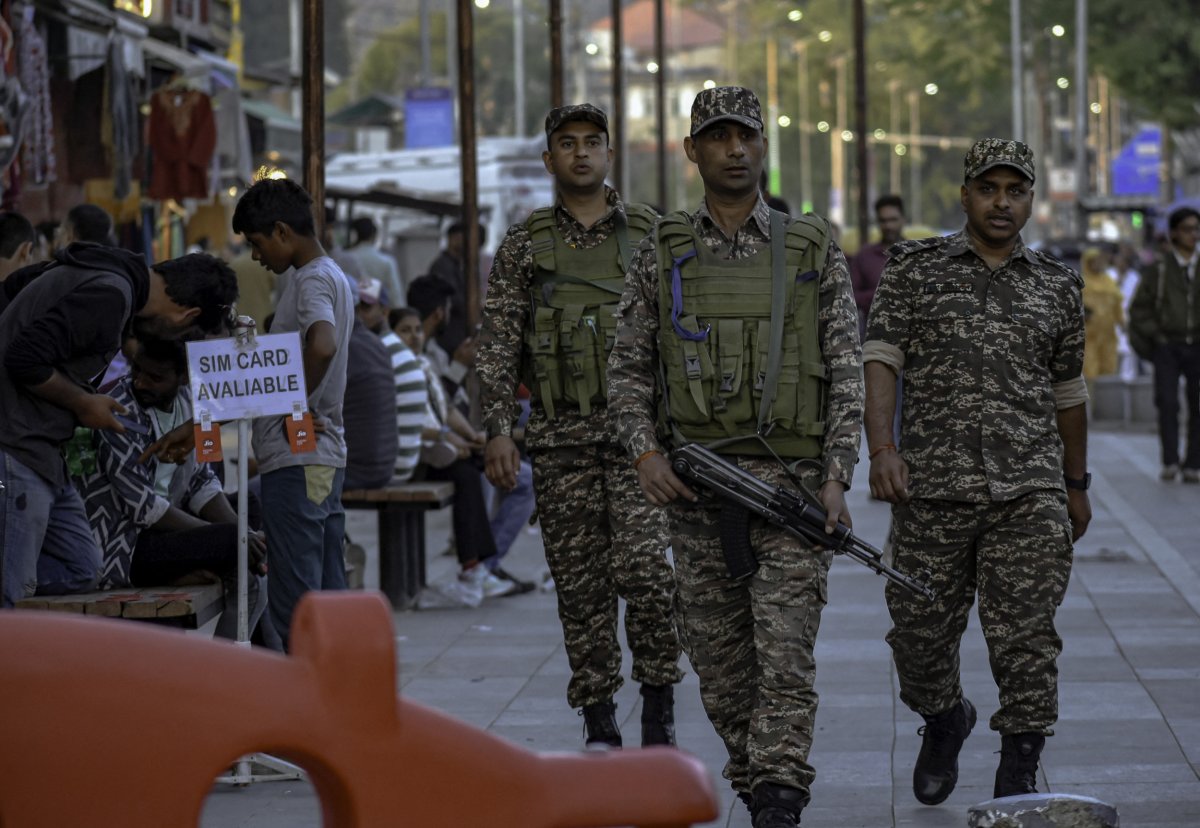
Indian authorities have identified three suspects in the Pahalgam massacre, including two Pakistani nationals. In response, New Delhi has suspended the Indus Waters Treaty, revoked visas, shut down land crossings and downgraded diplomatic relations. Prime Minister Narendra Modi's government has also reportedly granted the armed forces "complete operational freedom" to retaliate.
Modi, speaking the day after the killings, promised a powerful response. "They have made the mistake of attacking the soul of India," Modi said. "Those who have planned and carried out this attack will be punished beyond their imagination."
In the Newsweek interview, Sheikh maintained Pakistan had no role in the attack and questioned India's narrative. "We would not want to , but if it is imposed, then we would rather die with dignity than survive with indignity," he said.
India said that such rhetoric will not deflect attention from accountability. "India will identify, track and punish every terrorist, their handlers and their backers," its embassy said.
Clashes between rival powers in Kashmir date back for more than a millennium, but the modern conflict between India and Pakistan can be traced to the 1947 partition amid the United Kingdom's withdrawal from its colonial holdings across a once-united Indian subcontinent. The two newly independent nations immediately went to war for control over Kashmir and have since fought three more large-scale conflicts, mostly recently in 1999.
While much of the fight for Kashmir has traditionally revolved around the land dispute, water has become an increasingly crucial aspect of the feud.