
Donald Trump's executive orders suffer double legal blow
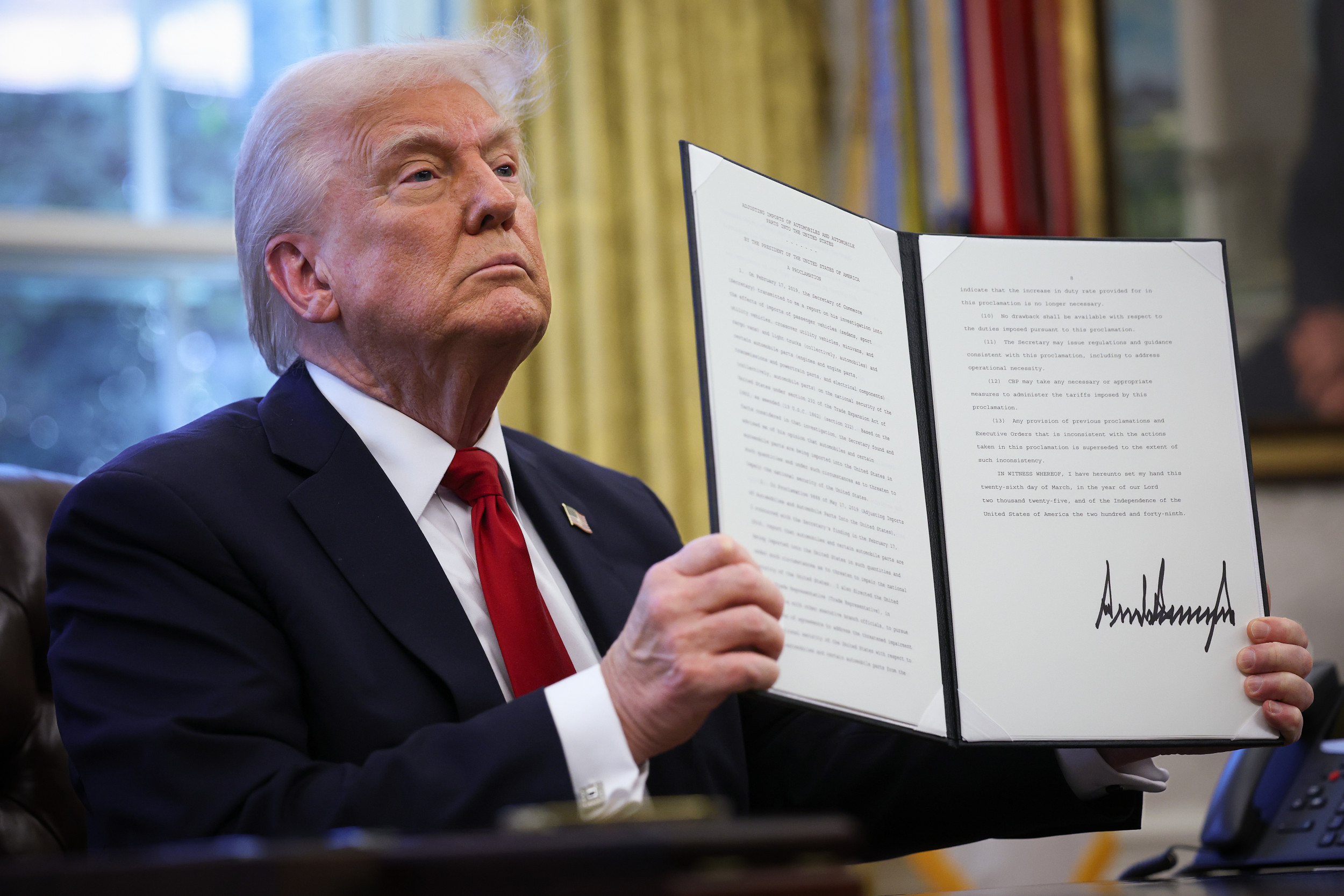
Two of President Donald Trump's executive orders were hit by legal setbacks on Monday.
Newsweek sought email comment from the office of U.S. Attorney General Pam Bondi on Tuesday.
Why It Matters
Trump has issued a large array of executive orders since his inauguration in January, and many are being challenged in the federal courts. The outcome of those cases will affect U.S. life in many ways.
What To Know
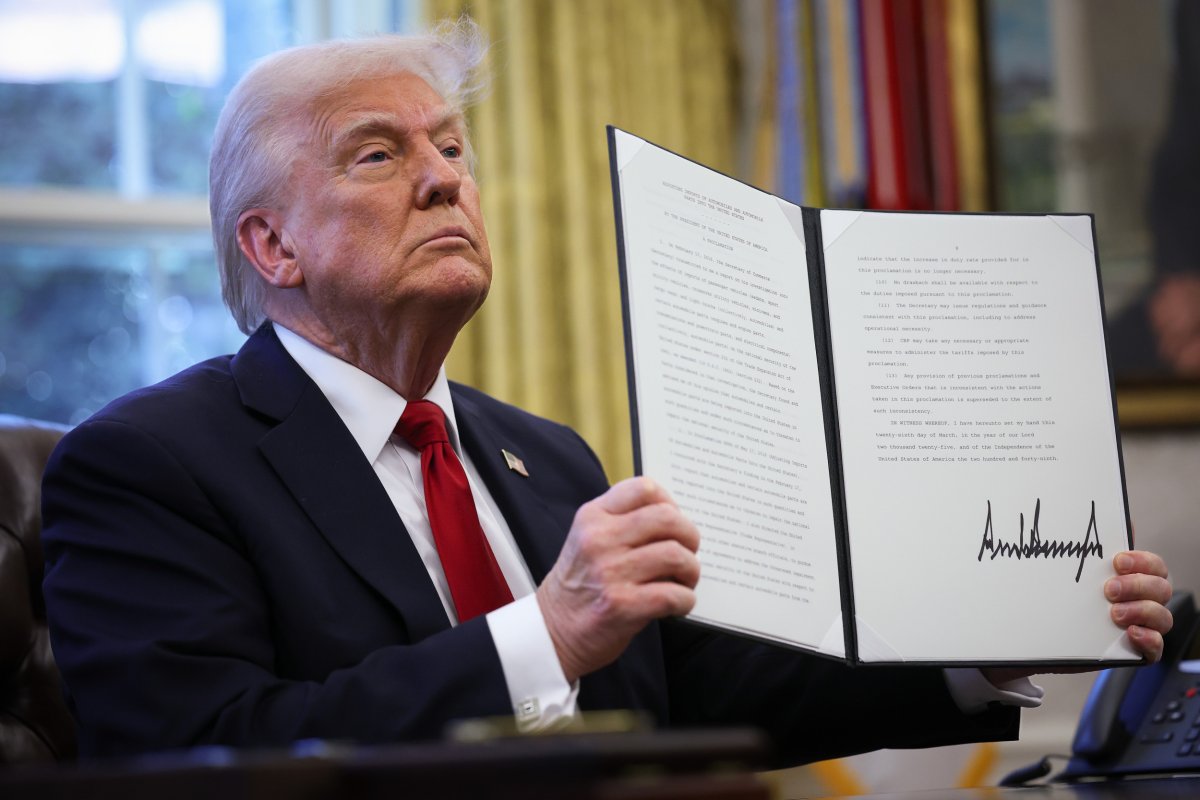
On Monday, Trump's executive orders on trans military members and voting rights hit major stumbling blocks.
Trans Military Members
A federal appeals court in San Francisco, California, refused to lift a block on Trump's order, which banned trans people from the U.S. military. Benjamin Settle, a federal judge in Tacoma, Washington, had issued a preliminary injunction against Trump's order.
Trans Incompatible With 'Readiness And Lethality'
Trump administration lawyers filed an appeal to the 9th Circuit, in which they had argued that, without a stay, "the military will be forced to continue implementing a policy that the Department has determined is not compatible with military readiness and lethality."
On March 31, the San Francisco-based 9th Circuit Court of Appeals refused to place a stay on Settle's order while the Trump administration launched a full appeal.
The Trump administration had already begun recalling and firing trans military members.
They will now be allowed to keep their jobs while the Trump administration continues its appeal in San Francisco.
Voting Rights
On March 31, Democrats filed a 74-page lawsuit in Washington, D.C., against the Trump executive order on voting requirements.
Trump's executive order orders the attorney general to "take all necessary action" against any states that count absentee or mail-in ballots received after election day.
That would mark a major crackdown on mail in ballots, which has favored Democrats in the past.
Trump's order also requires proof of citizenship for voters, something that Democrats also strongly oppose.
'Election Denialism'
The challenge was filed on Monday by Senate Minority Leader Chuck Schumer; House Minority Leader Hakeem Jeffries; and four national Democratic committees, including the Democratic National Convention .
The lawsuit states: "In the United States of America, the President does not get to dictate the rules of our elections.
"Although the Order extensively reflects the President's personal grievances, conspiratorial beliefs, and election denialism, nowhere does it (nor could it) identify any legal authority he possesses to impose such sweeping changes upon how Americans vote."
What People Are Saying
Lambda Legal and the Human Rights Campaign Foundation, two civil rights groups that took the challenge against the military trans ban, said in a statement that they were pleased that the San Francisco court has refused to lift the preliminary order.
The statement added that they would fight the Trump appeal "on behalf of transgender service members who serve our country selflessly and with distinction and honor."
In a joint statement, Schumer and Jeffries stated that their voting right case would challenge Trump's "debunked" conspiracy theories.
"Donald Trump and DOGE are doing this as an attempt to rationalize their repeatedly debunked conspiracy theories and set the groundwork to throw out legal votes and ignore election outcomes they do not like," their statement reads.
What Happens Next
The Trump administration will continue with its appeal in the trans case, but will not be able to fire trans military members while the case is being heard.
The Washington, D.C., federal district court will hear the Democrats' case. It will first have to decide whether to impose a temporary restraining order on Trump's voting rights order while the case continues.